
In American politics, few rumors are as persistent or as puzzling as the one suggesting Donald Trump is gay or has had an intimate encounter with Bill Clinton. The speculation has circulated in whispers and online forums for years, but it has recently roared back into public discourse with a new, viral intensity. The catalyst for this resurgence isn’t a political scandal in the traditional sense, but a fresh batch of released emails connected to the late, disgraced financier Jeffrey Epstein. These documents have ignited a firestorm of speculation, memes, and late-night comedy jokes, pushing a once-fringe theory into the mainstream conversation.
Understanding why people are saying this requires a trip through a labyrinth of unverified emails, political nicknames, and a long, complicated history between two of the most famous families in American politics. The story is a strange blend of high-level power and schoolyard gossip, and it reveals much about the current state of political discourse. The core of the rumor hinges on a single, bizarre phrase found in these newly public communications, pulling a presidential nickname from the past back into the spotlight.
You Might Like: Thomas Massie: A Love Story of Loss and New Beginnings
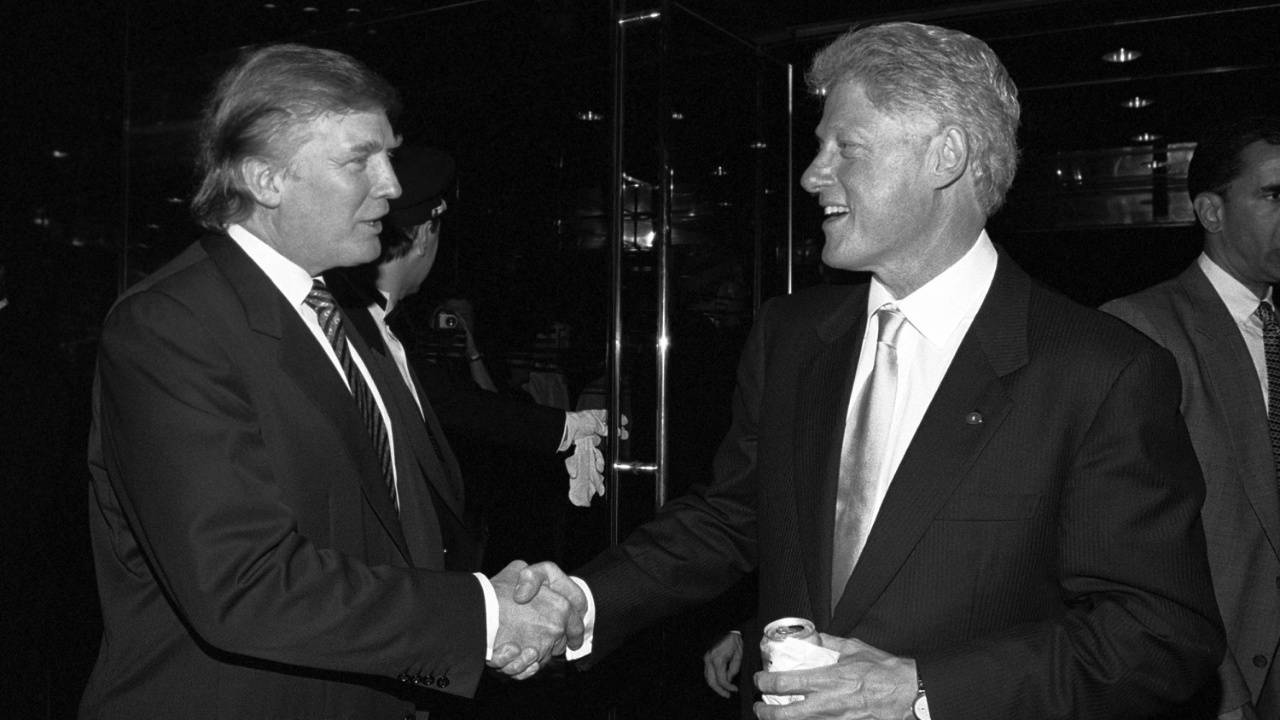
The relationship between Donald Trump and Bill Clinton has always been a subject of fascination. Before they were political archenemies, they moved in similar social circles as wealthy, well-known New York figures. There are photographs of them together at events, and Trump even donated to Clinton’s political campaigns in the past. This former camaraderie makes their later political rivalry all the more dramatic. The specific rumor that Trump performed o*** s** on Clinton, however, gained its biggest boost from the recent release of documents related to Jeffrey Epstein.
Among the thousands of emails made public, one particular message has become a focal point. The email, written by Epstein’s brother, Mark, contained a provocative question, asking if Russian President Vladimir Putin possessed a compromising photo of “Trump b—ing Bubba.” In this context, “Bubba” is widely understood to be a reference to Bill Clinton, who was often informally called “Bubba” during his political career, a nickname that echoed his Southern roots. This single line, though completely unverified and presented without any evidence, was all the internet needed to set the rumor mill ablaze.
The “B—ing Bubba” Email and the Culture of Insinuation
The phrase “b—ing Bubba” has become a major talking point, not so much in serious political analysis but in the realms of comedy and social media. The release of the emails was a major cultural moment, and television comedy shows quickly incorporated the salacious details into their material. On “Saturday Night Live,” the joke was front and center. During a segment, the show referenced the email, with one co-anchor quipping, “In one of the emails, Epstein’s brother asked if Vladimir Putin has a picture of Donald Trump giving o*** s** to someone named Bubba, which was an old nickname for Bill Clinton, so I guess that’s one job that Trump has created.”
Donald Trump is America’s First Openly Gay President!🏳️🌈 pic.twitter.com/duTpTUZveu
— Buba (@drunkbuba) November 14, 2025
More Read
In another joke from the same show, a faux-news clip was played of Trump saying, “Everybody knows I went down on Bill Clinton.” These skits, while clearly meant as satire, have played a significant role in amplifying the rumor and introducing it to a massive audience. The story thrives on this kind of insinuation, where a question posed in a private email is treated as a public fact through repetition and humor. The lack of any credible evidence or photographic proof is often sidelined in favor of the narrative’s sheer shock value and its utility as a political weapon.
A History of Transactional Politics and Personal Attacks
To fully grasp the context of these rumors, it’s helpful to look at Donald Trump’s own history of commenting on the personal lives and sexuality of others. His approach to LGBT issues has often been described as transactional, focused on his own interests in the moment rather than a fixed ideology. He has, at times, positioned himself as an ally, such as when he became the first GOP nominee to positively mention the LGBTQ community in a convention speech. Conversely, his administration pursued many policies critics labeled as anti-LGBTQ, including a ban on transgender people serving in the military.
On a personal level, he has not shied away from using loaded language against opponents. He famously and repeatedly targeted former Congressman Anthony Weiner, calling him a “perv” and a “sleazebag” while focusing on the scandal that ended Weiner’s career. This history of making personal conduct a central part of political attacks makes the current rumors about his own alleged encounter with Clinton particularly ironic.
The speculation, whether true or not, is a reflection of a political climate where personal destruction is a common tactic and where the lines between private lives and public battles have been completely erased. The “Bubba” rumor is simply the latest and most bizarre example of this phenomenon, proving that in today’s politics, no subject is off-limits.