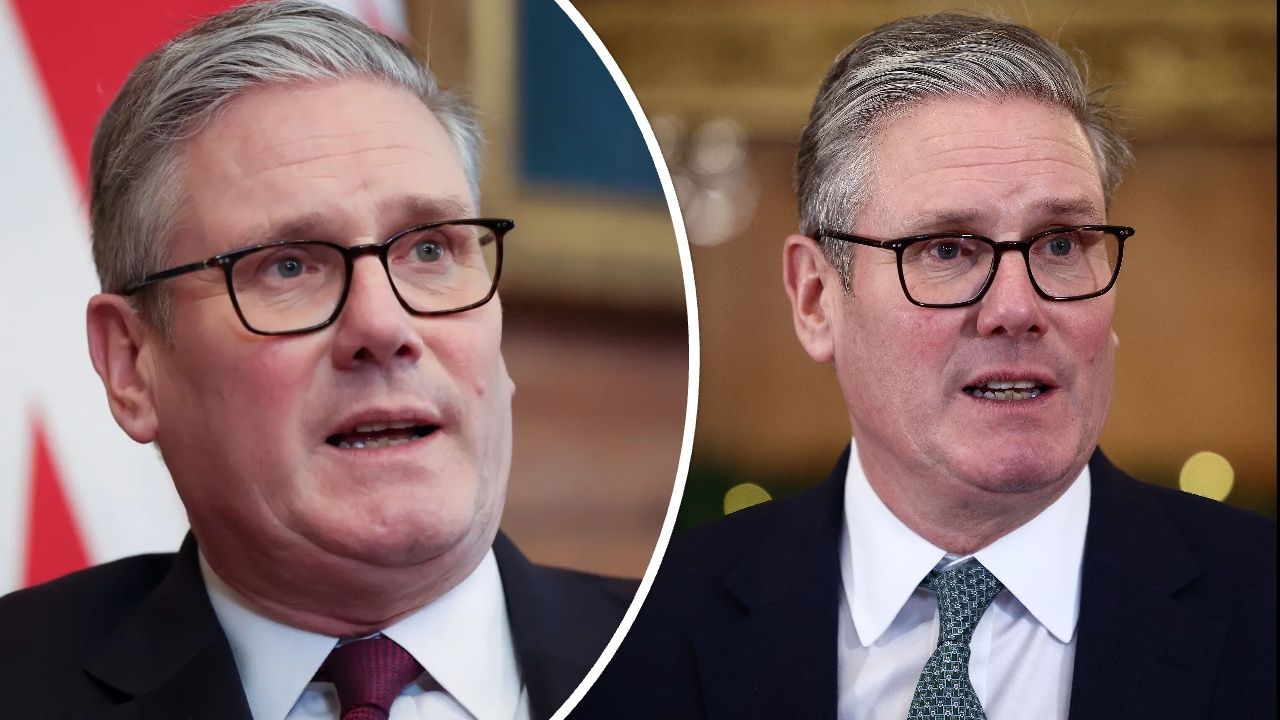

The question of who will succeed Keir Starmer as Labour leader and Prime Minister has shifted from speculative Westminster gossip to the most urgent political reality in Britain. After months of mounting internal pressure, poor local election results and a growing sense that his premiership had run out of road, the endgame appears to be unfolding at remarkable speed.
Starmer is now widely expected to announce his departure as early as Monday, just two years after leading Labour to a landslide general election victory in 2024. The catalyst for this dramatic turn has been Andy Burnham’s resounding victory in the Makerfield by-election, which has cleared the path for a leadership challenge and triggered an avalanche of calls for Starmer to set out an exit timetable.
The pressure on Keir Starmer has been building for months. Following disastrous local election results in May 2026, over 95 Labour MPs had already called on him to resign or set out a timetable for his departure. Health Secretary Wes Streeting resigned, along with four junior ministers and four ministerial aides, in protest at Starmer’s leadership. Policy U-turns, a prolonged cost-of-living crisis and sustained criticism from both the left and right of his party had eroded his standing. A recent Opinium poll found that 55 per cent of respondents believe Starmer should quit as Labour leader and leave Downing Street. Yet despite all this, it was Burnham’s by-election victory that finally broke the dam.
You Might Like: Eloy Room 2026: Wife, Kids, Salary, Net Worth, and His Historic World Cup Heroics
The Burnham Factor
Andy Burnham, the Greater Manchester mayor and self-styled “King of the North”, has emerged as the overwhelming favourite to replace Starmer. Burnham won the Makerfield by-election on 19 June with a decisive 55 per cent of the vote, beating Reform UK’s candidate by more than 9,000 votes and increasing Labour’s share by 10 per cent. The victory was all the more significant because it came in a constituency where Reform had made sweeping gains just a month earlier in the local elections. For Burnham’s allies, this proved he is Labour’s best hope of preventing Nigel Farage’s populist party from winning the next general election.
Burnham has long been seen as the frontrunner to replace Starmer, consistently placing far ahead of any other Labour figure in opinion polls. He has been hinting at a leadership bid for months, and his return to Westminster as an MP now makes him eligible to challenge under party rules. To force a contest, any challenger needs nominations from at least 20 per cent of the parliamentary party – 81 of Labour’s 403 MPs. Burnham’s team are understood to have secured the support of around 200 MPs, a figure they believe has since surged closer to 300. His allies are now increasingly confident of a “coronation-style” transfer of power, avoiding the need for a lengthy and potentially damaging leadership contest.
British Prime Minister Keir Starmer on the brink of resigning — Sun pic.twitter.com/f0POACQAiS
— NewsWire (@NewsWire_US) June 20, 2026
More Read
Starmer has insisted he would fight any formal leadership bid, telling the BBC: “If there is a contest, yes I will run”. But the political realities are shifting beneath him. Cabinet allies, including Business Secretary Peter Kyle, have publicly acknowledged that Starmer is “reflecting on the political realities” he now faces. Transport Secretary Heidi Alexander and Foreign Secretary Yvette Cooper have urged him to set out an exit timetable, while Home Secretary Shabana Mahmood and Energy Secretary Ed Miliband had already done the same after May’s election rout. One Burnham ally put it bluntly: “We passed every single ridiculous test that they set… there couldn’t be a clearer message”.
Other Contenders and the Road Ahead
While Burnham is the clear frontrunner, he is not the only name in the frame. Wes Streeting, the former Health Secretary who resigned from cabinet in protest at Keir Starmer’s leadership, has pledged to seek the top job and claims to have sufficient backers. Streeting argues the party needs a “battle of ideas” over its future direction.
However, his candidacy faces an uphill struggle; if wavering Labour backbenchers conclude that Burnham is the likely winner, they are expected to swing behind the Greater Manchester mayor. Other figures such as Deputy Leader Lucy Powell and Angela Rayner have been mentioned in dispatches, but neither has mounted a serious challenge. Powell notably refused to say whether Starmer should lead the party into the next election, a telling sign of the uncertainty at the top of the party.
Also See: Zlatan Ibrahimović’s Unlikely Origins: A Bosniak-Croatian Son of Sweden
The mechanics of any transition remain fluid. If Keir Starmer stands down voluntarily, Labour’s National Executive Committee would set the rules for a leadership election, potentially allowing Burnham to take over without a contested ballot if no other candidate secures the required nominations. If Starmer insists on fighting, a full leadership contest involving party members and affiliated trade unions could take up to six weeks – the same timeframe as the 2020 race that made Starmer leader.
Some Labour MPs have expressed concerns that such a contest could further damage the party’s prospects and create unnecessary uncertainty for the markets. Burnham is expected to be formally sworn in as an MP on Monday, and his allies are urging Starmer to announce a smooth transition to allow Burnham to become the next prime minister.
Whatever happens in the coming days, one thing is clear: Keir Starmer’s time in Downing Street is drawing to a close. The question is no longer whether he will be replaced, but how quickly and by whom. All signs point to Andy Burnham as the man who will step into the breach, tasked with uniting a fractured party and taking on the challenge of Reform UK at the next election. For a prime minister who won a historic majority just two years ago, it is a remarkably swift and brutal fall from grace – but in British politics today, such falls are becoming the rule, rather than the exception.