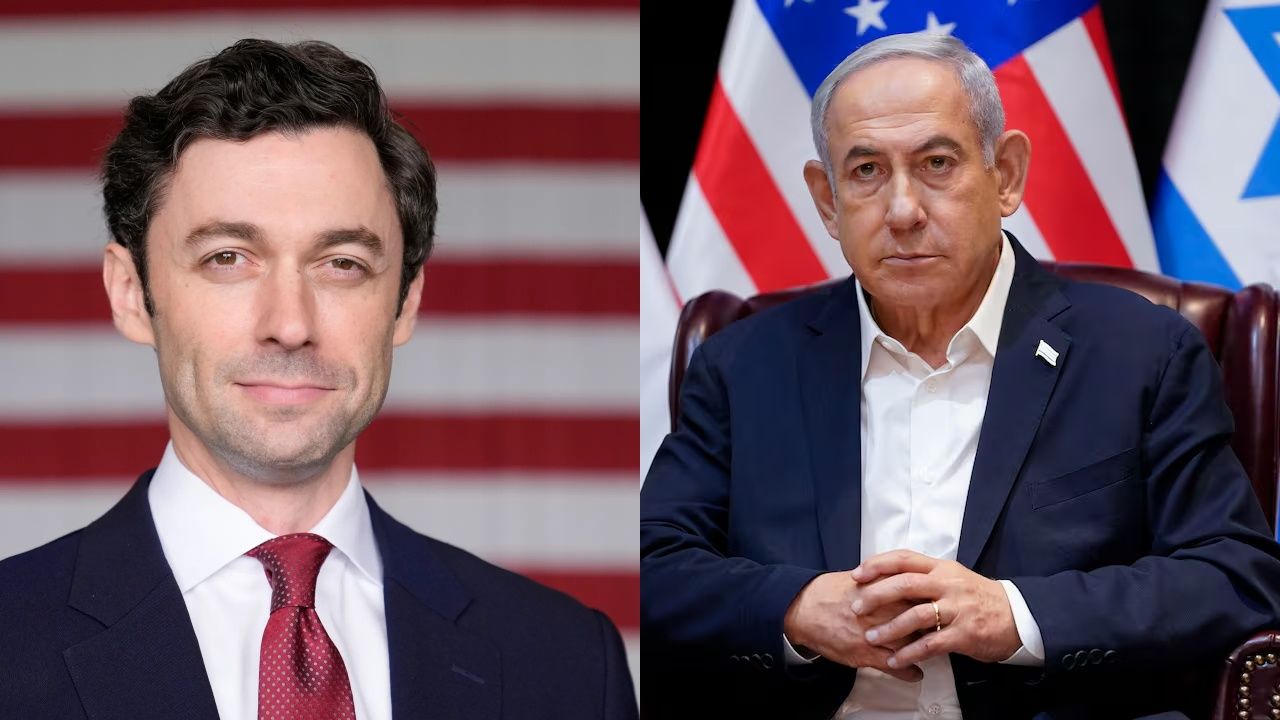
No Senate race in 2026 carries more symbolic weight than Georgia’s, where Democratic incumbent Jon Ossoff finds himself in a political crucible. As the first Jewish senator from Georgia, he represents a historic milestone. Yet, his nuanced and sometimes critical stance on the Israeli government’s ongoing military campaign in Gaza has alienated a surprising constituency: a segment of his own Jewish political base. The conflict in the Middle East has inserted itself into the heart of a high-stakes American election, forcing Ossoff to walk a tightrope between his deeply held personal values and the demands of a pro-Israel establishment.
This situation is further complicated by the powerful lobbying group AIPAC. While many politicians seek the group’s financial backing, Ossoff’s recent votes have led to a dramatic reversal of fortune. The battle for Ossoff’s Senate seat is not just a fight between Democrats and Republicans; it is a proxy war over the direction of U.S. foreign policy, fueled by millions of dollars from deep-pocketed political action committees seeking to either defend or defeat him.
You Might Like: Rick Brunson’s Family: His Mother, Five Siblings, and the Wife Who Stayed Through the Moves
AIPAC Funding: A Campaign Relationship of Opposition
Contrary to a common assumption, Senator Jon Ossoff is not currently receiving financial support from the American Israel Public Affairs Committee (AIPAC). As his 2026 re-election campaign intensifies, finance data shows that the powerful political powerhouse is actively backing his opponent. AIPAC and its affiliated super PAC, the United Democracy Project, have directed significant funds towards supporting his Republican rival, Mike Collins, giving him a financial edge in the primary.
Georgia’s first Jewish senator, Jon Ossoff, is losing support with Jewish donors and constituents for his criticism of Israel’s actions in Gaza.
Follow: @AFpost pic.twitter.com/zeNDuiYsZk
— AF Post (@AFpost) February 18, 2025
Historically, while Ossoff has accepted funds from pro-Israel sources, they constitute a minute fraction of his overall haul—less than 1% of his massive $57 million war chest. The primary reason for AIPAC’s opposition is clear: Ossoff has broken with party and lobby orthodoxy. His votes to restrict certain U.S. weapons sales to Israel—including a July 2025 vote to block the transfer of thousands of assault rifles as a protest against Prime Minister Benjamin Netanyahu’s policies—have been deemed unacceptable by the organization. Consequently, AIPAC is not just withholding funds; it has actively targeted Ossoff with attack ads.
Also See: Kristen Welker: The Personal Story Behind the ‘Meet the Press’ Moderator
A Delicate Balancing Act: Faith, Politics, and Israel
For Jon Ossoff, his Jewish identity is not a campaign prop but a foundational principle. He chose to be sworn in on a Hebrew Bible owned by a prominent rabbi and converted to Judaism before his bar mitzvah at The Temple, a reform synagogue in Atlanta with a storied history in the civil rights movement. He often argues that his upbringing “instilled in me a conviction to fight for the marginalized, the persecuted and the dispossessed.” However, this same moral conviction led him to criticize what he saw as a humanitarian catastrophe in Gaza, straining ties with some in the community.
More Read
His evolving stance has exposed deep rifts. While Ossoff has voted for billions of dollars in security assistance to Israel, his votes to block specific arms sales have drawn sharp rebukes. A New York Times report from February 2025 revealed that some prominent Jewish donors and leaders in Georgia, unhappy with his positions, quietly urged Republican Governor Brian Kemp to run against him. The situation is fluid, however. In December 2025, speaking at his childhood synagogue, Ossoff urged resilience against a rising tide of global antisemitism, signaling that while the controversy over his votes has “largely faded,” the underlying tension between his political pragmatism and his prophetic moral vision remains a defining feature of his political future.