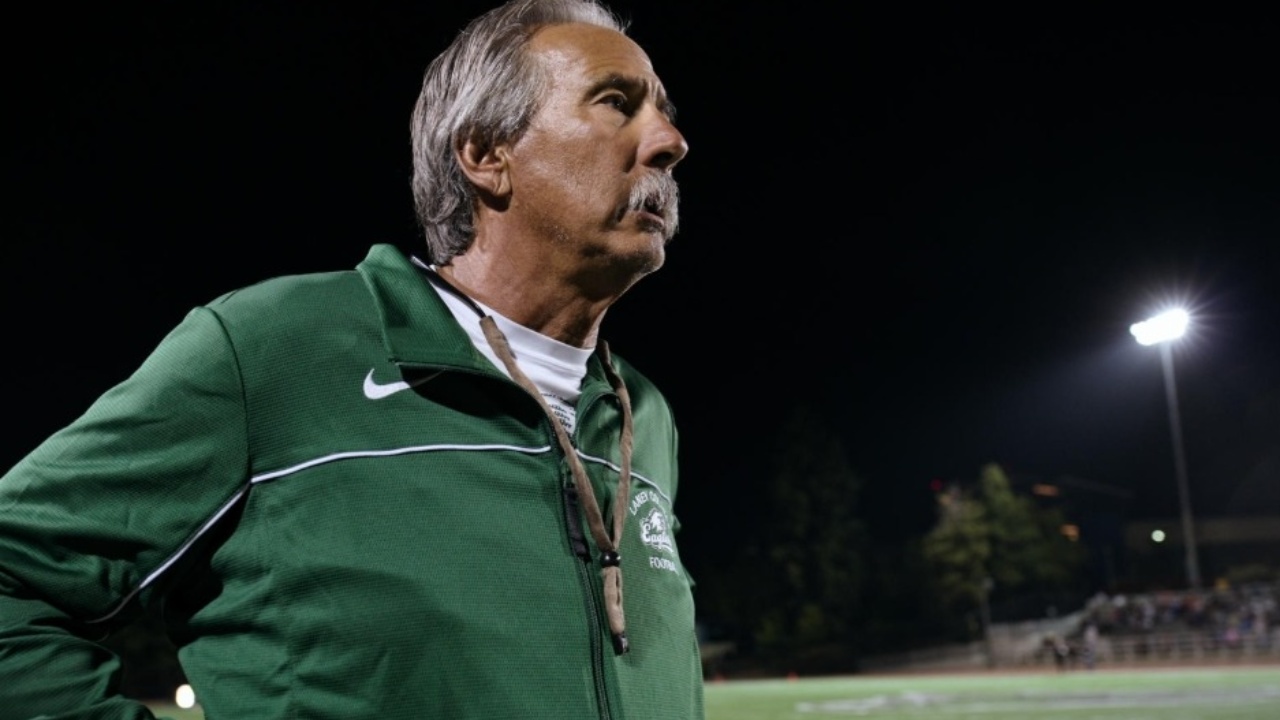

The Laney College community and the wider sports world were shaken by the news that broke on a Thursday in 2025 when reports confirmed that legendary football coach and Athletic Director John Beam had been shot on campus. The incident, which triggered a lockdown and a swift police response, left many anxiously awaiting updates on the condition of the man often called the “godfather of Oakland football.”
Coach Beam, a pillar of the community for over four decades, had just recently stepped away from his head coaching role, ending a spectacular 45-year run on the sideline. His career, famously featured in Netflix’s Last Chance U, was defined not just by championships but by a profound commitment to transforming young lives. As questions about his well-being circulated, many also became curious about the financial aspects of his long career, including his salary from the college and his net worth in 2025.
You Might Like: Meet Eddie Murphy’s 10 Kids, His Greatest Role
John Beam’s Salary and Career at Laney College
While Coach Beam’s contract details as both head football coach and Athletic Director at the public community college were never fully publicized, public payroll databases offer a glimpse into his earnings. According to data from Transparent California, in 2018, his total pay was listed at $190,847.05, with additional benefits bringing his total compensation to $241,935.56. A separate report from Essentiallysports noted that in 2019, his total earnings as an instructor with the Peralta Community College District were roughly $234,055, which was comprised of a base salary of $135,531 plus benefits and additional pay. These figures reflect the value placed on his leadership and the immense impact he had on the institution.
Beam’s coaching journey at Laney College began in 2004, and he quickly became the heart of the program. He played a key role in guiding the Eagles to three conference titles before becoming head coach in 2012. Six years later, he led the team to a state championship. His legacy, however, extends far beyond the scoreboard. He was a vocal advocate for his players and the community, pushing back against the “Last Chance U” narrative by insisting Laney was a “first chance” and “Best Chance U.”
Beloved Laney College Athletic Director John Beam, whose team was featured on Netflix’s “Last Chance U,” has been shot on campus, sources tell ABC station KGO. The school was placed on lockdown. @mattgutmanABC reports. https://t.co/d7bz2ay4dD pic.twitter.com/CFbtwRmSJQ
— World News Tonight (@ABCWorldNews) November 14, 2025
Under his guidance, the program boasted an incredible 90 percent graduation and transfer rate, and he was responsible for mentoring over 20 players who went on to the NFL, as well as more than 100 who played for Division 1 teams. After his 45-year coaching career, Beam retired from his role on the sideline in late 2024, though he was set to continue as the college’s Athletic Director.
More Read
Also See: The Personal Side of Lindsey Halligan: Family & Marriage
Examining Coach Beam’s Net Worth and Lasting Legacy
When it comes to John Beam’s net worth in 2025, there is no concrete public figure available. The financial details of this Oakland legend remain private, which is often the case for individuals working within public educational institutions. What is clear, however, is that his wealth was not measured in dollars alone. Beam’s career was marked by a notable loyalty to Oakland; he turned down offers from Division I schools to stay and build a legacy within his community. This dedication to place over prestige likely had a greater impact on his personal fulfillment than on his financial statements.
His true net worth is perhaps best calculated by the countless lives he changed. Former players and colleagues often speak of his influence off the field, emphasizing how he helped them with academics, securing degrees, and building character. John Beam himself summed up his philosophy by saying, “It was always about teaching young men and young women, student-athletes, how to fit into society.”
He envisioned that his legacy would not be the trophies or the championships, but the “young people” he guided. While the public may not know the exact number in his bank account, the immense social and community capital he built through his decades of service is undeniable. As the community hopes for his recovery, his standing as an invaluable pillar of Oakland is his most significant valuation.