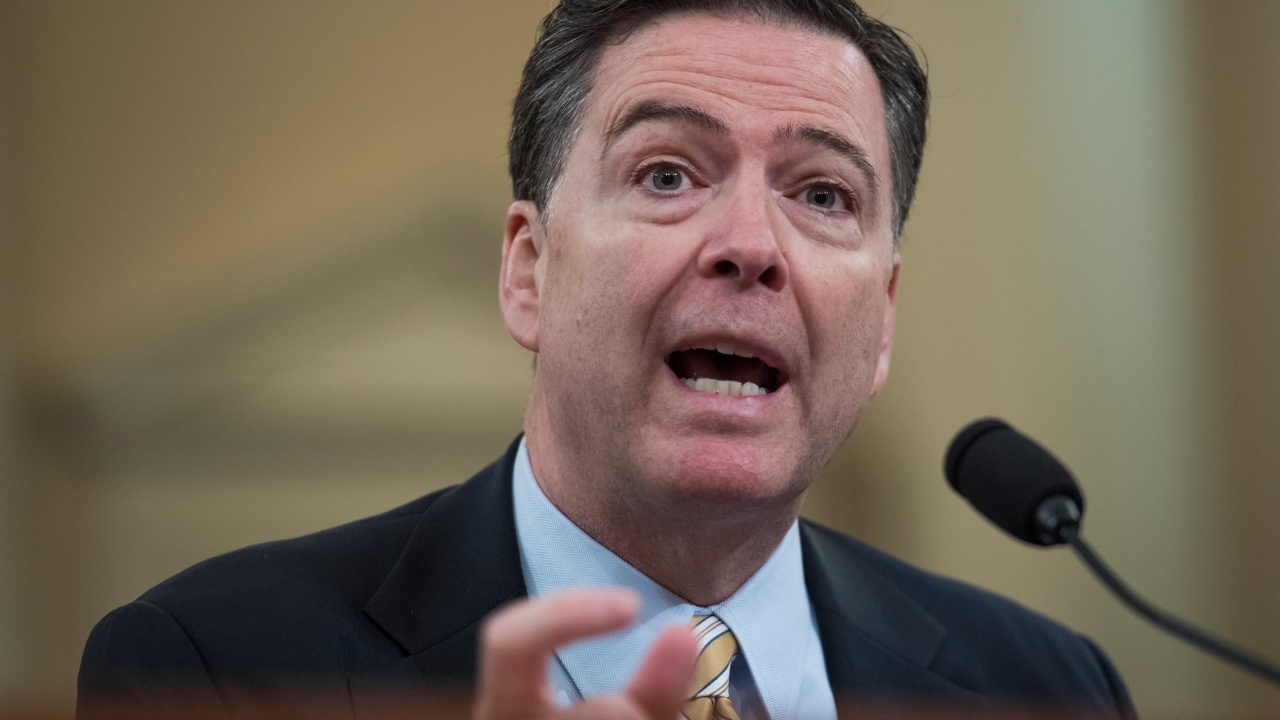

In a dramatic escalation of President Donald Trump’s public campaign against his critics, former FBI Director James Comey was indicted on September 25, 2025, on charges of lying to Congress and obstruction of justice. The indictment, filed by a federal grand jury in Alexandria, Virginia, accuses Comey of making false statements during a 2020 Senate Judiciary Committee hearing about whether he authorized leaks to the media. The move comes just days after Trump publicly pressured his Attorney General to take action against his political adversaries, shattering long-standing norms of Justice Department independence and setting the stage for a high-stakes legal battle that blends law and politics inextricably.
James Comey, who led the FBI from 2013 until his controversial firing by Trump in 2017, has vehemently denied the charges. In a video statement, he framed the indictment as a consequence of opposing the president, stating, “My family and I have known for years that there are costs to standing up to Donald Trump… I am innocent. So, let’s have a trial.” President Trump, who has long viewed Comey as a key figure in the “Russiagate hoax,” celebrated the indictment on his Truth Social platform, calling it “JUSTICE IN AMERICA!” and labeling Comey “one of the worst human beings this Country has ever been exposed to.”
The case immediately raised alarms among legal experts and Democrats, who see it as a blatant weaponization of the justice system for political retribution, while Trump administration officials insist it is about accountability and no one being above the law.
You Might Like: FAFO Meaning: Elon Musk’s “FAFO” Tweet, Explained
The Specific Charges and Their Origins
The two-count indictment against James Comey is strikingly brief, but the allegations against him are specific. The charges stem from his testimony on September 30, 2020, before the Senate Judiciary Committee, where he was questioned about the FBI’s handling of investigations during the 2016 election. During the hearing, Republican Senator Ted Cruz of Texas pressed Comey on testimony he had given three years earlier, in May 2017.
In that original testimony, Comey stated he had “never” been an anonymous source and had not authorized anyone else at the FBI to be an anonymous source for news reports about investigations into Hillary Clinton or Donald Trump. When Cruz asked him in 2020 if he stood by that 2017 testimony, Comey replied, “I stand by the testimony.”
Here’s James Comey’s indictment.
Count 1: Making false statements to the US Senate.
(18 U.S. Code § 1001)Count 2: Obstruction of a Congressional proceeding.
(18 U.S. Code § 1505)There was a third charge, but the Grand Jury did not indict. pic.twitter.com/yYROwVrXcq
— Praying Medic (@prayingmedic) September 26, 2025
More Read
According to the indictment, that statement was false. The government alleges that Comey had, in fact, authorized an individual identified as “PERSON 3” to serve as an anonymous source regarding an FBI investigation into “PERSON 1″—understood to be Hillary Clinton. While the indictment does not name the individuals, the case appears to hinge on the account of Comey’s former deputy, Andrew McCabe. A 2018 Justice Department inspector general’s report noted that McCabe said he had discussed with Comey his decision to leak information about the Clinton Foundation investigation to a Wall Street Journal reporter.
Based on this, prosecutors charge that Comey’s 2020 statement to Senator Cruz was a lie intended to obstruct the congressional proceeding. The first count is for making a false statement (18 U.S.C. § 1001), and the second is for obstruction of a congressional proceeding (18 U.S.C. § 1505). Each charge carries a maximum penalty of five years in prison.
A Firestorm of Political Pressure and Legal Doubts
The path to this indictment has been highly unusual and is marked by intense political pressure. The timeline was urgent, as the five-year statute of limitations for charges based on the 2020 testimony was set to expire on September 30, 2025. Just days before the indictment, on September 20, President Trump publicly applied pressure on social media, writing to Attorney General Pam Bondi, “We can’t delay any longer… JUSTICE MUST BE SERVED, NOW!!!” and specifically naming James Comey, Senator Adam Schiff, and New York Attorney General Letitia James.
This public demand was followed by a significant shakeup at the U.S. Attorney’s Office for the Eastern District of Virginia, which was handling the case. The previous acting U.S. Attorney, Erik Siebert, was forced out after concerns that he was not moving aggressively enough to charge Trump’s targets. Trump then appointed Lindsey Halligan, his former personal lawyer who had represented him in the Mar-a-Lago classified documents case and had zero experience as a criminal prosecutor, to lead the office. She was sworn in on Monday, September 22, and personally presented the case to the grand jury by Thursday, September 25.
Also See: Jake Knapp’s Partner Makena White: A Love Story Cut Short
The process faced immediate hurdles and confusion. Career prosecutors in the office had previously circulated a memo arguing there was not enough probable cause to indict Comey. Furthermore, during the court proceeding where the indictment was filed, the presiding magistrate judge, Lindsey Vaala, expressed visible confusion over discrepancies in the charging documents. The judge noted that two inconsistent versions of the indictment had been filed, one of which indicated the grand jury had rejected one of the three counts prosecutors initially sought. When Judge Vaala pointed out that the problematic document had Halligan’s signature on it, Halligan initially replied, “I did not see that one.”
This rocky start has led many legal experts to predict a tough road ahead for the prosecution. They point to potential defenses, including the argument that McCabe’s account, which itself was questioned in the same inspector general’s report that cited it, is not credible enough to prove guilt beyond a reasonable doubt. More significantly, Comey’s defense team, led by renowned prosecutor Patrick Fitzgerald, is expected to argue that he is a victim of “vindictive prosecution,” citing Trump’s very public demands for charges as evidence that the case is politically motivated.
🚨 BREAKING: James Comey posts a video statement following his indictment
“My family and I have known for years that there are costs to standing up to Donald Trump, but we couldn’t imagine ourselves living any other way.
We will not live on our knees, and you shouldn’t either.… pic.twitter.com/7oisRjWAfK
— MeidasTouch (@MeidasTouch) September 26, 2025
James Comey’s arraignment is scheduled for October 9, 2025, before U.S. District Judge Michael S. Nachmanoff. As the case moves forward, it represents far more than just the legal fate of one man. It is a profound test of the Justice Department’s independence and a clear signal from the Trump administration that its promise of retribution against perceived enemies is now being fulfilled. The outcome will resonate through the American political landscape, potentially chilling opposition and redefining the relationship between power and justice in the United States.