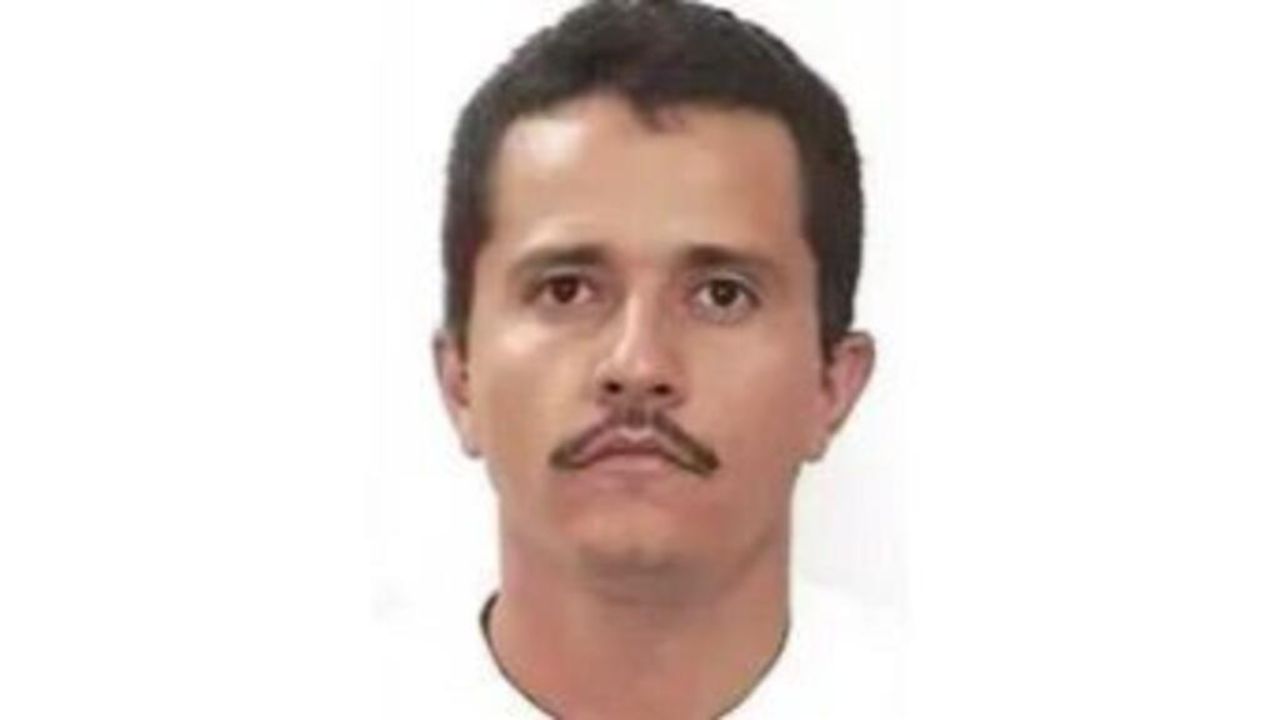

The recent death of Nemesio Oseguera Cervantes, widely known as El Mencho, has sparked widespread curiosity about the origins and significance of his infamous moniker. Confirmed by Mexican authorities on February 22, 2026, Oseguera Cervantes succumbed to injuries sustained during a military operation in Tapalpa, Jalisco, aimed at capturing him.
As the leader of the Jalisco New Generation Cartel (CJNG), one of Mexico’s most powerful and violent criminal organizations, his demise triggered immediate chaos, including roadblocks, vehicle fires, and clashes across several states. This event, marking a significant blow to organized crime, has led many to delve into the etymology of “El Mencho,” seeking to understand how a simple nickname became synonymous with terror and drug trafficking.
Born Rubén Oseguera Cervantes in 1966 in the rural town of Aguililla, Michoacán, he later adopted the name Nemesio—possibly in honor of his godfather—before rising through the ranks of Mexico’s underworld. His alias, “El Mencho,” emerged as a shorthand that encapsulated his identity in the cartel world. With a $15 million U.S. bounty on his head prior to his death, Oseguera Cervantes was notorious for expanding the CJNG’s influence through brutal tactics, including extortion, fuel theft, and fentanyl production. The surge in online searches for the meaning of his name reflects not just morbid fascination but also a desire to humanize a figure who evaded capture for years, blending folklore with criminal legend.
You Might Like: Johnny Gaudreau’s Legacy: Meet Noa, Johnny Jr., and Carter
The Spanish Roots of ‘El Mencho’
In Spanish, “El Mencho” is primarily a diminutive or phonetic derivation of the name Nemesio, a common practice in Mexican culture where formal names are shortened or altered for familiarity or affection. This nickname follows linguistic patterns seen in other Spanish hypocoristics, such as “Pancho” from Francisco or “Chucho” from Jesús, where sounds like “s” shift to “ch” through informal evolution. For Oseguera Cervantes, “Mencho” likely stemmed from “Nemesio,” stripping away syllables to create a punchy, memorable alias that carried no inherent negative connotation initially.
🚨‼️⚡️The Mexican government confirmed that Nemesio “El Mencho” Oseguera died while being transferred to Mexico City after being wounded in a confrontation during a federal operation in Tapalpa, Jalisco. pic.twitter.com/K5C2X4BIWW
— MOSCOW NEWS 🇷🇺 (@MOSCOW_EN) February 22, 2026
Contrary to some misconceptions, “El Mencho” does not translate to a specific phrase or carry a hidden insult in Spanish. Words like menso, meaning “fool” or “silly,” might sound similar but are unrelated to this nickname’s origin. Instead, it’s a personal identifier, much like how “El Chapo” (meaning “Shorty”) described Joaquín Guzmán’s stature. Oseguera Cervantes had other aliases, such as “El Señor de los Gallos” or “The Lord of the Roosters,” derived from his reported passion for cockfighting, but “El Mencho” remained his most prominent handle in media and law enforcement circles. In regions like Jalisco and Michoacán, such nicknames are cultural staples, often passed down or adopted to signify belonging or respect within communities.
More Read
Also See: Willie Colón: Exploring His Marriage, Children, and Family
English Translations and Broader Interpretations
When translated to English, “El Mencho” doesn’t yield a direct equivalent because it’s a proper noun rooted in personal nomenclature rather than descriptive language. The article “El” simply means “The,” so a literal rendering might be “The Mencho,” but this conveys little beyond the name itself. English speakers often encounter it in news reports without alteration, preserving its Spanish flavor to emphasize its cultural context. Some online translations or urban legends have erroneously linked it to terms like “lord” or “rooster,” confusing it with his secondary nicknames.
Beyond linguistics, the name “El Mencho” has taken on symbolic weight in English-language discussions of global drug wars. It represents the archetype of the elusive kingpin, evoking comparisons to figures like Pablo Escobar. In scholarly or journalistic analyses, it’s dissected not for etymology but for what it reveals about cartel branding—how aliases humanize or mythologize criminals.
With his death, interpretations may evolve, perhaps framing “El Mencho” as a cautionary tale of unchecked ambition. Yet, at its core, the name remains a straightforward derivation, devoid of profound mystery, highlighting how ordinary origins can lead to extraordinary infamy.